简体中文
 English
 اللغة العربية
 Español


ASTM A270 Stainless Steel Sanitary Tube: Grades, Surface Finish, Applications and How to Choose the Right Tubing
In food processing, beverage production, pharmaceutical manufacturing, and other hygiene-sensitive industries, the quality of a piping system directly affects product safety, production efficiency, and equipment reliability.
Choosing the right stainless steel tubing is therefore about more than selecting a material with good corrosion resistance. Internal surface quality, weld integrity, dimensional accuracy, cleaning requirements, and long-term operating conditions all need to be considered.
ASTM A270 stainless steel sanitary tube is specifically designed for sanitary applications where controlled material quality and specialized surface finishes are important.
But what exactly does ASTM A270 cover? Which stainless steel grade is suitable for your production environment? And how can you determine whether a tube meets your actual process requirements?
This guide explains the key technical considerations to help engineers, equipment manufacturers, distributors, and industrial buyers make more informed purchasing decisions.
1. What Is ASTM A270 Stainless Steel Sanitary Tube?
ASTM A270/A270M is a standard specification covering seamless, welded, and heavily cold-worked welded austenitic and ferritic/austenitic stainless steel sanitary tubing.
It is primarily intended for applications in the dairy and food industries, where special surface finishes are required. Pharmaceutical-quality requirements may also be specified as supplementary requirements.
Unlike general-purpose stainless steel pipes, sanitary tubing is manufactured with particular attention to surface condition, dimensional consistency, and suitability for hygienic processing systems.
Its main purpose is to provide a reliable tubing solution for transferring liquids and other process materials in environments where contamination control and cleanability are important.
Typical applications include:
Milk and dairy processing lines
Beverage production systems
Food processing equipment
Pharmaceutical processing systems
Hygienic liquid transfer pipelines
Clean-in-place (CIP) process systems
Stainless steel sanitary equipment and assemblies
One important point: ASTM A270 compliance alone does not automatically establish compliance with every hygienic design, pharmaceutical, or regulatory requirement. Additional standards, certifications, and project specifications may be necessary depending on the application.
2. Common Stainless Steel Grades for ASTM A270 Tubing
Material selection has a direct impact on corrosion resistance, service life, maintenance requirements, and overall operating costs.
The most commonly specified grades for sanitary stainless steel tubing include 304, 304L, 316, and 316L, subject to the applicable edition and grade requirements of the specification.
ASTM A270 304 Stainless Steel Tube
Grade 304 is widely used in food processing and general sanitary applications.
Its main advantages include:
Good corrosion resistance in many food-processing environments
Good formability and weldability
Relatively economical material cost
Wide availability and processing flexibility
304 stainless steel is often suitable for milk processing equipment, beverage production lines, food transfer systems, and general hygienic applications where the operating medium is not highly corrosive.
However, it may not be the best choice for environments involving significant chloride exposure or aggressive cleaning chemicals.
ASTM A270 304L Stainless Steel Tube
304L is a low-carbon version of 304 stainless steel.
The reduced carbon content helps minimize the risk of sensitization during welding and is particularly useful when welded assemblies may experience conditions that promote intergranular corrosion.
Typical applications include:
Welded sanitary piping systems
Food processing equipment
Stainless steel tanks and vessels
Hygienic equipment requiring extensive welding
For manufacturers producing welded sanitary assemblies, 304L can offer additional flexibility in material selection.
ASTM A270 316 Stainless Steel Tube
Grade 316 contains molybdenum, which improves resistance to certain types of corrosion, particularly in chloride-containing environments.
Compared with 304, 316 is often a better choice for:
Saline or chloride-containing process media
Certain chemical processing environments
More demanding food and beverage production conditions
Industrial applications requiring improved corrosion resistance
The actual suitability still depends on chloride concentration, temperature, chemical composition, and cleaning procedures.
ASTM A270 316L Stainless Steel Tube
316L combines the corrosion-resistant characteristics of 316 with a lower carbon content.
It is widely considered for applications involving welded sanitary piping, pharmaceutical processing equipment, and demanding liquid transfer systems.
Its benefits include:
Improved resistance to sensitization during welding
Good corrosion resistance in suitable process environments
Good weldability
Suitability for demanding sanitary equipment manufacturing
For buyers who prioritize long-term reliability and corrosion resistance, 316L is often worth evaluating despite its higher initial material cost.
Comparison of Common Grades
| Grade | Main Characteristics | Typical Applications |
|---|---|---|
| 304 | General corrosion resistance and cost efficiency | Food and beverage processing |
| 304L | Low carbon, suitable for welded fabrication | Welded sanitary assemblies |
| 316 | Improved resistance to certain corrosive environments | More demanding liquid processing |
| 316L | Low carbon with molybdenum-enhanced corrosion resistance | Pharmaceutical and hygienic process equipment |
Purchasing tip: Do not select 316L simply because it is considered a higher-grade material. Evaluate the actual process medium, chloride exposure, cleaning chemicals, temperature, and operating conditions first.
3. Why Surface Finish Matters in Sanitary Stainless Steel Tubing
Surface finish is one of the most important factors distinguishing sanitary tubing from ordinary industrial stainless steel pipes.
In a sanitary processing system, an unsuitable internal surface can make cleaning more difficult and increase the risk of product residue accumulating in the piping.
This may result in additional cleaning time, increased chemical consumption, maintenance difficulties, and potential contamination risks.
A properly specified surface finish helps improve:
Internal surface cleanability
Resistance to product residue accumulation
Consistency during sanitary processing
Cleaning and maintenance efficiency
Overall hygienic system performance
Internal Surface Finish
The internal surface is particularly important because it comes into direct contact with the process medium.
For example, milk, juice, beverages, and pharmaceutical process liquids may leave residues if the internal surface and system design are not properly controlled.
Buyers should confirm:
Required internal surface roughness (Ra)
Measurement units and testing methods
Internal polishing requirements
Weld seam condition
Surface inspection procedures
External Surface Finish
The external surface also matters, especially for equipment installed in hygienic production environments.
A suitable external finish can make routine cleaning easier and help maintain the overall appearance of processing equipment.
Depending on the application, customers may request mechanically polished, satin, or other specified surface finishes.
Common ASTM A270 Surface Finish Options
The specification includes different finish options, which may include:
Mill finish
Mechanically polished finish
No. 80 finish
No. 120 finish
No. 180 finish
No. 240 finish
Electropolished finish
Specified maximum roughness average (Ra)
The required finish should be agreed upon before production.
Important: A finish designation such as No. 180 or No. 240 should not be treated as a universal Ra value. Buyers should specify the required numerical surface roughness, measurement location, and acceptance criteria when these are critical to the project.
4. ASTM A270 Welded vs. Seamless Stainless Steel Tubing
Another important purchasing decision is whether to choose welded or seamless sanitary tubing.
Both manufacturing methods can be suitable for sanitary applications when the finished product meets the relevant specification and project requirements.
Welded ASTM A270 Sanitary Tube
Welded sanitary tubing is manufactured by forming stainless steel strip into a tubular shape and joining the longitudinal edges through welding.
Potential advantages include:
Cost-effective production
Good dimensional consistency
Efficient manufacturing for standard sizes
Suitable for many food and beverage applications
Flexible production options for different specifications
The weld area requires particular attention. Weld integrity, internal weld condition, heat treatment, and surface finishing should be evaluated according to the applicable requirements.
Seamless ASTM A270 Sanitary Tube
Seamless tubing is manufactured without a welded seam.
Its potential advantages include:
No longitudinal weld seam
Suitable for applications where seamless construction is specified
Flexibility for certain demanding engineering requirements
However, seamless construction does not automatically guarantee better sanitary performance. Internal surface quality, dimensional accuracy, material grade, and cleaning requirements remain essential.
Which One Should You Choose?
| Selection Factor | Welded Tube | Seamless Tube |
|---|---|---|
| Manufacturing process | Forming and welding | Seamless tube production |
| Longitudinal weld seam | Yes | No |
| Production economics | Often more economical | Often higher cost |
| Dimensional consistency | Can be tightly controlled | Depends on manufacturing process |
| Sanitary performance | Depends on finished surface and weld quality | Depends on finished surface and dimensional quality |
| Best selection basis | Project specifications and cost requirements | Project specifications and seamless requirements |
The correct choice should be based on the actual engineering requirements rather than assuming that one manufacturing method is always superior.
5. Key Applications of ASTM A270 Stainless Steel Sanitary Tubing
ASTM A270 sanitary tubing is used in industries where cleanable process equipment and reliable liquid transfer are essential.
Food Processing Industry
Food production facilities require piping systems that can handle frequent cleaning and contact with different food products.
Common applications include:
Food ingredient transfer lines
Liquid food processing systems
Processing equipment connections
Stainless steel food production machinery
Dairy Industry
Dairy production requires careful control of hygiene throughout the processing system.
ASTM A270 tubing can be used in:
Milk transfer pipelines
Cream processing systems
Dairy production equipment
Milk storage and processing connections
Beverage Industry
Beverage manufacturers often need stainless steel tubing with consistent internal surfaces to support hygienic production and cleaning procedures.
Typical applications include:
Juice processing systems
Bottled water production equipment
Soft drink manufacturing lines
Beverage mixing and transfer systems
Pharmaceutical Industry
Pharmaceutical manufacturers have demanding requirements for equipment cleanliness, material traceability, and process control.
ASTM A270 tubing may be specified for certain pharmaceutical applications, with pharmaceutical-quality requirements and other supplementary requirements agreed upon where necessary.
It should not be assumed that ASTM A270 alone guarantees compliance with ASME BPE, GMP, or all pharmaceutical process requirements.
6. Important Technical Specifications to Confirm Before Purchasing
For industrial buyers, a product description that only states ASTM A270 316L stainless steel tube is not sufficient for accurate purchasing.
A complete technical specification helps prevent misunderstandings between suppliers, equipment manufacturers, and end users.
The following information should be confirmed before placing an order.
| Technical Parameter | What Buyers Should Specify |
|---|---|
| Standard | ASTM A270/A270M and applicable edition |
| Material grade | 304, 304L, 316, 316L, or another permitted grade |
| Manufacturing process | Seamless, welded, or heavily cold-worked welded |
| Outside diameter (OD) | Required tube diameter |
| Wall thickness (WT) | Required wall thickness |
| Length | Fixed length or customized length |
| Internal finish | Required Ra and finishing method |
| External finish | Polished or specified surface condition |
| Heat treatment | Applicable specification requirements |
| Testing | Required mechanical and nondestructive tests |
| Documentation | Material Test Certificate and agreed inspection records |
| Packaging | Protection against scratches, contamination, and transportation damage |
ASTM A270 covers tubing up to and including 12 inches (300 mm) in outside diameter.
The specific dimensional tolerances, testing requirements, and acceptance criteria should be checked against the applicable standard edition and purchase order.
7. How to Evaluate the Quality of ASTM A270 Sanitary Tubes
For manufacturers and distributors, buying sanitary tubing is not only about comparing prices.
A lower purchase price may become more expensive if the tubes require additional polishing, cause fabrication problems, or create difficulties during installation and cleaning.
Here are several important quality factors to evaluate.
1. Material Verification
Confirm that the supplied material matches the ordered stainless steel grade.
Material identification and chemical composition should be supported by appropriate inspection records and material test certificates.
2. Dimensional Accuracy
Check outside diameter, wall thickness, straightness, and length.
Dimensional consistency is important for welding, fitting connections, and automated equipment assembly.
3. Internal Surface Quality
Inspect the internal surface for scratches, pits, visible defects, and irregular finishing.
Where specified, verify Ra measurements using an agreed inspection method.
4. Weld Quality
For welded tubing, the weld area should be evaluated for defects and surface irregularities.
The internal weld condition is particularly important in sanitary applications.
5. Testing and Documentation
Depending on the applicable edition and purchase requirements, ASTM A270 includes relevant chemical analysis, mechanical testing, and hydrostatic or nondestructive electric testing provisions.
Buyers should clarify which tests apply to their order and what inspection records must be supplied.
6. Packaging and Transportation Protection
Sanitary tubing can lose its surface quality during handling and transportation.
Appropriate protective packaging helps reduce:
Surface scratches
Dust and dirt contamination
Moisture-related damage
Deformation during transportation
For polished tubing, individual protection and suitable separation materials are especially important.
8. How to Reduce Total Purchasing Costs Without Sacrificing Quality
When sourcing ASTM A270 stainless steel sanitary tubing, the cheapest quotation is not necessarily the most economical option.
A better purchasing strategy considers the total cost throughout the product's service life.
First, select the correct material grade.
Using 316L when 304L is sufficient may unnecessarily increase material costs. On the other hand, choosing an unsuitable grade can increase corrosion risks and replacement costs.
Second, specify surface roughness clearly.
If the internal Ra requirement is not clearly defined, additional polishing or inspection may be necessary after delivery.
Third, confirm dimensions before production.
Incorrect outside diameter or wall thickness can cause fitting problems and unnecessary fabrication work.
Fourth, evaluate supplier manufacturing capabilities.
A supplier with reliable material sourcing, polishing equipment, dimensional inspection, and quality documentation can help reduce the risk of inconsistent batches.
Finally, consider long-term performance.
Material durability, cleanability, maintenance frequency, and replacement intervals should all be included in the purchasing decision.
9. How to Choose a Reliable ASTM A270 Stainless Steel Sanitary Tube Supplier
For international buyers, choosing the right supplier is just as important as choosing the right specification.
A qualified supplier should be able to understand your actual application rather than simply provide a standard product quotation.
Before confirming an order, consider asking:
Can you supply ASTM A270/A270M tubing in the required grade?
Can you provide the relevant material test certificates?
What welded and seamless manufacturing options are available?
Can you meet the required internal Ra value?
Can you provide customized outside diameters and wall thicknesses within your manufacturing range?
What inspection and testing records are available?
How do you protect polished surfaces during transportation?
A reliable manufacturing partner should communicate clearly about technical feasibility, production lead time, inspection procedures, and delivery requirements.
10. Frequently Asked Questions About ASTM A270 Stainless Steel Sanitary Tubes
Q1: What is the difference between ASTM A270 and ASTM A312?
ASTM A270 is specifically designed for stainless steel sanitary tubing, primarily for food and dairy applications, with special surface finish requirements.
ASTM A312 covers seamless, welded, and heavily cold-worked austenitic stainless steel pipes intended for general corrosive service and high-temperature applications.
The two standards serve different application requirements and should not be considered interchangeable.
Q2: Is ASTM A270 316L suitable for pharmaceutical applications?
ASTM A270 316L can be specified for certain pharmaceutical process applications.
However, the required surface finish, material traceability, cleaning validation, hygienic design, and applicable pharmaceutical standards must also be considered.
ASTM A270 compliance alone does not automatically mean that a tube meets every pharmaceutical requirement.
Q3: What surface roughness is required for ASTM A270 sanitary tubing?
The required Ra value depends on the application and purchaser's specifications.
There is no single universal Ra value that should be assumed for every ASTM A270 order.
Buyers should clearly specify the required internal and external surface roughness, measurement method, and acceptance criteria.
Q4: Can ASTM A270 sanitary tubes be customized?
Yes. Available customization depends on the manufacturer's production capabilities and the applicable standard requirements.
Common purchasing specifications include material grade, outside diameter, wall thickness, tube length, manufacturing process, and surface finish.
Q5: Is welded ASTM A270 tubing suitable for food processing?
Yes. Welded ASTM A270 tubing can be used in food processing applications when it meets the applicable specification and project requirements.
Particular attention should be given to weld quality, internal surface condition, and cleaning requirements.
Q6: What documents should I request when purchasing ASTM A270 tubes?
Depending on the purchase order and applicable requirements, buyers may request:
Material Test Certificate (MTC)
Chemical composition report
Mechanical test records
Nondestructive testing records, where applicable
Dimensional inspection report
Surface roughness inspection report
Certificate of conformity
The required documents should be agreed upon before production.
Q7: Does ASTM A270 automatically mean 3-A or ASME BPE compliance?
No. ASTM A270 is a material product specification for sanitary tubing. 3-A and ASME BPE address additional hygienic equipment or bioprocessing requirements.
If your project requires these standards, the relevant requirements must be specified and verified separately.
Conclusion: Choose Sanitary Tubing Based on Your Actual Production Requirements
ASTM A270 stainless steel sanitary tubing plays an important role in modern food, dairy, beverage, and pharmaceutical processing systems.
However, selecting the right tube requires more than choosing between 304L and 316L.
Material grade, manufacturing process, internal surface roughness, dimensional accuracy, weld quality, inspection records, and operating conditions all contribute to the final performance of a sanitary piping system.
For industrial buyers, the best approach is to define the application first, establish the technical specifications, and then select a supplier capable of consistently meeting those requirements.
Looking for ASTM A270 stainless steel sanitary tubes for your next project?
Share your required material grade, outside diameter, wall thickness, tube length, manufacturing process, and surface roughness requirements.
Our team can help evaluate your specifications and recommend a suitable stainless steel sanitary tubing solution for your production or equipment manufacturing needs.
Contact us today to discuss your project and request a customized quotation.
-
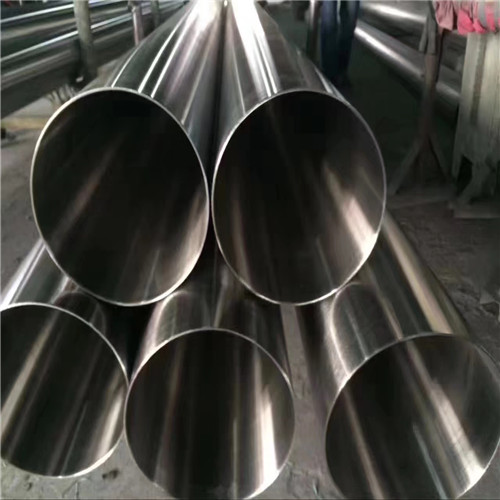
[Company news] High quality supply of stainless steel pipe for ho......
2022-04-10
After years of development and innovation, the stainless steel pipe for household decoration has evolved from a single "slot body" to a "system" produ......
-

[Company news] Warmly celebrate the official launch of the fsunsc......
2005-07-19
Foshan Sunsco Technology Co.Ltd is located in Foshan City of China, focusing on stainless steel area for more than 12 years. With the support of the m......
-
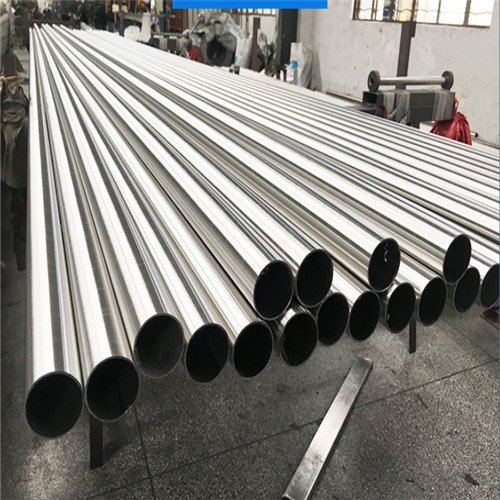
[Industry dynamics] 304 stainless steel pipe market improves
2021-12-20
FSUNSCO Company operates a series of 304 stainless steel tubes all the year round. Stainless steel pipe, 304 stainless steel plate, 304 stainless stee......
-
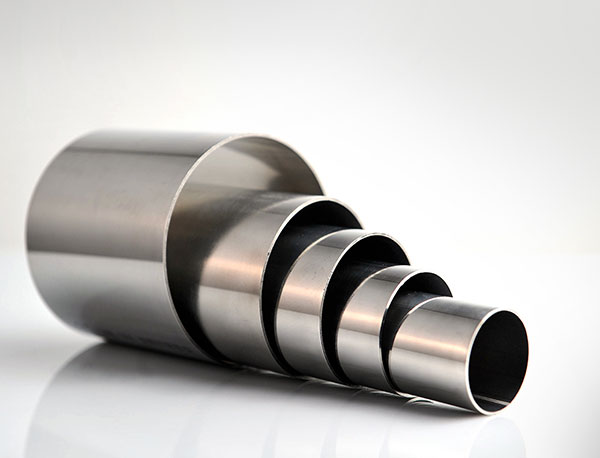
[Industry dynamics] What can help us to quickly distinguish between 30......
2020-06-20
Many friends will worry when choosing stainless steel, this is because he can not distinguish between 304 and 201 stainless steel, how to quickly dist......