简体中文
 English
 اللغة العربية
 Español



The Magnet Test (Pseudo-Science): A common misconception is that "if a magnet sticks, it is iron; if it doesn't, it is quality stainless steel." In reality, while 304 is an austenitic stainless steel and is non-magnetic or weakly magnetic in its annealed state, cold working, shearing, or stamping causes a partial phase transformation into martensite, which introduces noticeable magnetism. Conversely, poor-quality 200-series high-manganese steels can be formulated to be completely non-magnetic. Using a magnet as a primary indicator is technically fundamentally flawed.
Over-the-Counter Chemical Droppers (Unreliable): Inexpensive testing liquids rely on basic electrochemical reactions to observe color changes (such as turning red). These reactions are highly sensitive to ambient temperature, surface grease, acidity, and individual technique. They only provide a crude differentiation between the 200 and 300 series. They cannot quantify critical alloy percentages or detect re-melted scrap sheets.
Trace the Heat Number: Check the inkjet print or metal tag on the sheet surface. The heat and batch numbers must perfectly match the documentation.
Analyze Chemical Limits: Standard 304 chemistry must strictly satisfy: Chromium (Cr) 18.0%–20.0%, Nickel (Ni) 8.0%–10.5%, and Carbon (C) ≤ 0.08%. If the nickel content registers below 8.0%, the material fails to meet global 304 compliance standards.


Operation: The operator points the gun-style device at the cleaned metal surface and pulls the trigger. The tool emits X-rays to stimulate characteristic elemental emission lines.
The Result: Within 3 to 5 seconds, the screen provides a precise quantitative breakdown of Chromium (Cr), Nickel (Ni), Manganese (Mn), and Molybdenum (Mo). Counterfeit materials cannot bypass an XRF analysis.
Genuine 304 (Austenitic): Grinding meets higher resistance. The spark stream is sparse, thin, and short, showing a dull red or dark orange hue with minimal stream bursts (very little branching).
Counterfeit 304 / Grade 201 (High Manganese): Due to elevated manganese levels, the grinding process triggers a bright, aggressive, and long spark stream packed with intense burst patterns (multi-forked starbursts).
ICP-OES Testing: Inductively Coupled Plasma Optical Emission Spectroscopy is deployed for absolute tracing of trace impurities and definitive elemental limits.
Standard Salt Spray Testing (ASTM B117): Samples are subjected to a continuous 5% NaCl solution fog. Authentic 304 sheets comfortably endure over 168 hours without developing red rust. Substandard counterfeits usually show widespread surface failure within 24 to 48 hours.
Excessive Negative Tolerances (Under-gauging): A sheet labeled as 2.0 mm might measure only 1.7 mm or less under a micrometer. Always specify strict allowable tolerance ranges within purchase contracts.
Scrap Re-Melting: Recycled scrap steel can be melted down to barely hit the minimum 304 chromium and nickel targets. However, if the refining process is poor, harmful impurities like Sulfur (S) and Phosphorus (P) remain high, rendering the steel brittle during fabrication and lowering its overall corrosion resistance.
-
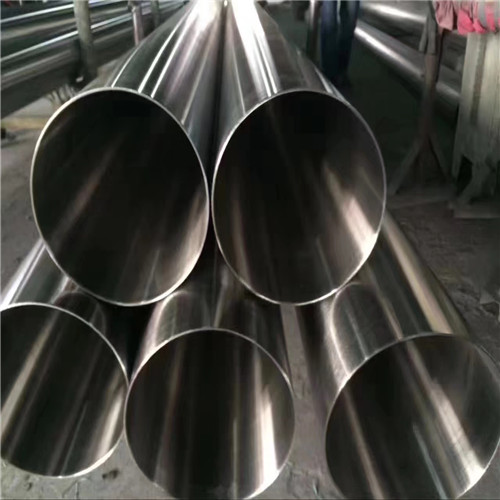
[Company news] High quality supply of stainless steel pipe for ho......
2022-04-10
After years of development and innovation, the stainless steel pipe for household decoration has evolved from a single "slot body" to a "system" produ......
-

[Company news] Warmly celebrate the official launch of the fsunsc......
2005-07-19
Foshan Sunsco Technology Co.Ltd is located in Foshan City of China, focusing on stainless steel area for more than 12 years. With the support of the m......
-
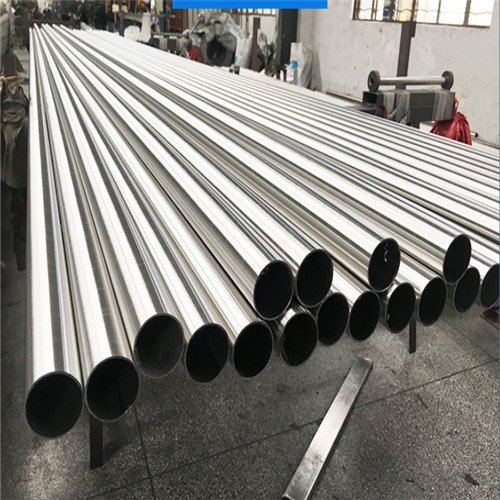
[Industry dynamics] 304 stainless steel pipe market improves
2021-12-20
FSUNSCO Company operates a series of 304 stainless steel tubes all the year round. Stainless steel pipe, 304 stainless steel plate, 304 stainless stee......
-
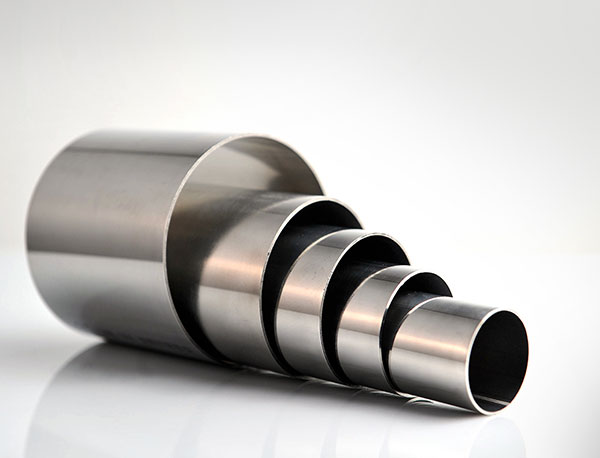
[Industry dynamics] What can help us to quickly distinguish between 30......
2020-06-20
Many friends will worry when choosing stainless steel, this is because he can not distinguish between 304 and 201 stainless steel, how to quickly dist......