简体中文
 English
 اللغة العربية
 Español


Typical Application Scenarios: Subsea flowlines, umbilical systems, gathering networks, and heat exchangers on offshore drilling rigs.
The Material Evolution: Under high chloride stresses, standard austenitic grades like 304 or 316L are highly susceptible to Stress Corrosion Cracking (SCC) and localized pitting. Consequently, modern subsea engineering has shifted extensively toward Duplex Stainless Steels (e.g., S32205, S32750 / 2507).
Engineering Advantages: Duplex alloys feature a balanced microstructural mix of austenite and ferrite. This gives them twice the yield strength of standard austenitic grades and a high Pitting Resistance Equivalent Number (PREn). This allows engineers to reduce pipe wall thickness—lowering overall topside weight—while securing decades of service life against localized corrosion.
Typical Application Scenarios: Bulk and specialty gas (e.g., silane, ammonia) delivery lines and high-vacuum exhaust lines.
Core Manufacturing Processes: This sector relies entirely on Bright Annealed (BA) pipes and Electropolished (EP) pipes, typically fabricated from low-carbon, high-molybdenum 316L (or VIM+VAR double-melted steels).
Engineering Advantages: Electropolishing reduces the internal surface roughness (Ra) of the pipe to below 0.1 μm. This minimizes internal surface area, prevents the physical adsorption of moisture and gas molecules, and strips away free iron to leave a chromium-rich passive layer. The result is absolute process gas purity at the point of use.
Typical Application Scenarios: Clean-in-Place (CIP) and Sterilize-in-Place (SIP) loops, bioreactor connections, and dairy processing lines.
Compliance Standards: Piping systems must strictly conform to the ASME BPE (Bioprocess Equipment) standard. All field joints must be executed via automated orbital TIG welding with full penetration, backed by rigorous borescope inspections.
Engineering Advantages: High-quality sanitary stainless steel pipes endure continuous cycles of high-temperature steam sterilization (>121°C) and aggressive chemical cleanings. Smooth interior walls (typically requiring Ra ≤ 0.4 μm) leave no dead zones for biological entrapment, ensuring system-wide sterility.
Typical Application Scenarios: High-pressure hydrogen refueling station (HRS) piping (operating at pressures from 35 MPa to 70 MPa) and fuel cell vehicle supply systems.
Metallurgical Innovations: Traditional steels crack unpredictably under high-pressure hydrogen exposure. Today, specially optimized high-nickel austenitic stainless steels (such as specialized versions of 316/316L or nitrogen-strengthened austenitic alloys) are the industry baseline.
Engineering Advantages: A high Nickel content (typically Ni ≥ 12%) stabilizes the austenitic matrix. This prevents strain-induced martensitic transformation during high-pressure operations, mitigating the risk of hydrogen-induced cracking and securing long-term infrastructure safety.
-
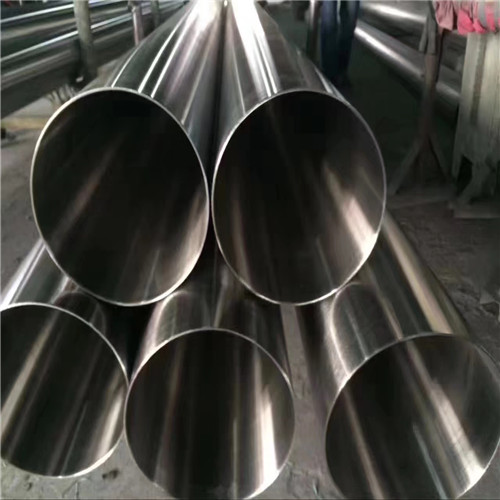
[Company news] High quality supply of stainless steel pipe for ho......
2022-04-10
After years of development and innovation, the stainless steel pipe for household decoration has evolved from a single "slot body" to a "system" produ......
-

[Company news] Warmly celebrate the official launch of the fsunsc......
2005-07-19
Foshan Sunsco Technology Co.Ltd is located in Foshan City of China, focusing on stainless steel area for more than 12 years. With the support of the m......
-
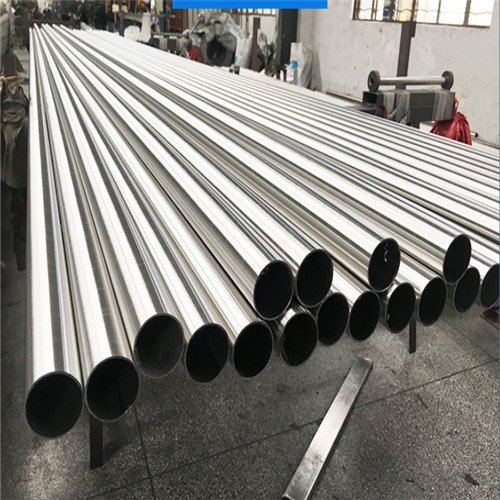
[Industry dynamics] 304 stainless steel pipe market improves
2021-12-20
FSUNSCO Company operates a series of 304 stainless steel tubes all the year round. Stainless steel pipe, 304 stainless steel plate, 304 stainless stee......
-
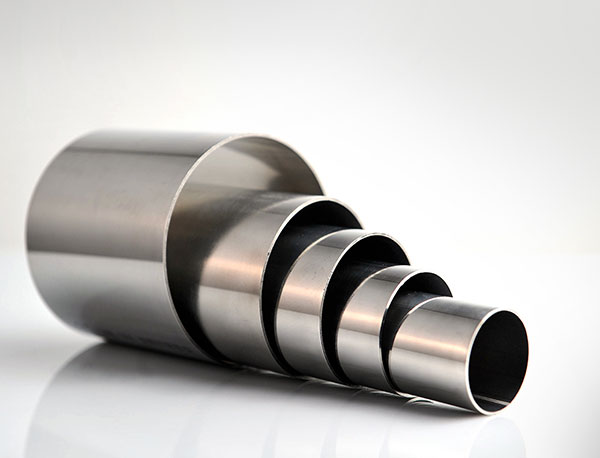
[Industry dynamics] What can help us to quickly distinguish between 30......
2020-06-20
Many friends will worry when choosing stainless steel, this is because he can not distinguish between 304 and 201 stainless steel, how to quickly dist......