简体中文
 English
 اللغة العربية
 Español


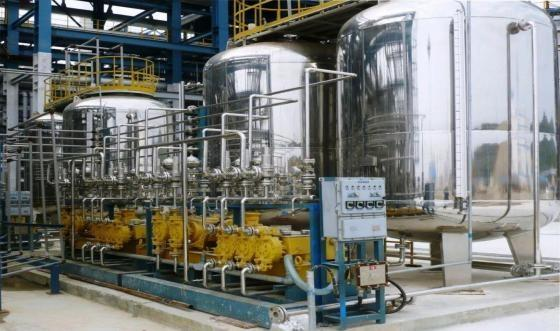
Material Requirement: The steel must maintain high yield and creep-rupture strength at elevated temperatures. Metallurgically, this requires strict control over the minimum carbon (C) content (typically 0.04% to 0.10% in "H" grades) combined with controlled grain sizing and heat treatment to impede dislocation movement and delay creep rupture.
Material Requirement: The alloy must contain sufficient chromium (Cr, typically ≥ 18%) to form a dense, adherent chromium oxide (Cr₂O₃) passive film. In extreme heat (> 800°C / 1470°F), elevated nickel (Ni) and silicon (Si) levels are necessary to prevent scale spallation, which can thin tube walls and block downstream headers.
Material Requirement: To prevent intergranular attack, alloys are stabilized with titanium (Ti) or niobium (Nb). For chloride-rich environments, higher molybdenum (Mo) content or duplex stainless steels are specified.
| Grade (ASTM / ASME) | EN / DIN Equivalent | Key Alloying Characteristics | Max Continuous Service Temp | Typical Applications & Technical Advantages |
|---|---|---|---|---|
| TP304H | 1.4948 | Controlled Carbon (0.04%–0.10%) | ~ 700°C (1290°F) | Conventional power boiler superheaters and reheaters. Cost-effective with reliable high-temp strength and weldability. |
| TP316H | 1.4919 | Added 2%–3% Molybdenum (Mo) | ~ 750°C (1380°F) | Chemical process heat exchangers and sulfur-bearing environments. Superior pitting resistance and creep strength over 304H. |
| TP321H | 1.4878 | Titanium (Ti) Stabilized | ~ 750°C (1380°F) | Heat exchangers and boilers requiring high intergranular corrosion resistance. Ti binds with carbon to prevent sensitization. |
| TP347H | 1.4912 | Niobium (Nb) Stabilized | ~ 800°C (1470°F) | Supercritical & ultra-supercritical (USC) boilers. Nb carbides are more stable than Ti, offering top-tier creep and steam oxidation resistance. |
| TP310S / 310H | 1.4845 | High Cr (25%) & High Ni (20%) | ~ 1050°C (1920°F) | Extreme-heat furnace tubes, petrochemical crackers, and high-temp gas heat exchangers. Unmatched oxidation and carburization resistance. |
| UNS S31803 / S32205 | 1.4462 | Duplex (Austenitic-Ferritic) | Max 300°C (570°F) | High-pressure, chloride-rich heat exchangers. Yield strength is double that of 304/316 with extreme Cl-SCC resistance. Limited by 475°C embrittlement. |
Mandatory Seamless Construction for High-Pressure Boilers
High-pressure boiler tubes must be manufactured via cold-drawn or cold-rolled seamless processes. Eliminating the longitudinal weld seam ensures uniform circumferential (hoop) stress distribution and prevents preferential creep cracking along weld zones.Solution Annealing and Coarse Grain Size Control
Austenitic heat-resistant tubes undergo high-temperature solution annealing (typically 1050°C–1150°C / 1920°F–2100°F) followed by rapid quenching to dissolve carbides back into the matrix. For TP304H, TP321H, and TP347H, standards generally mandate a grain size of ASTM No. 7 or coarser. Coarser grains minimize grain-boundary sliding at high temperatures, directly extending creep-rupture life.Internal Surface Finish & Shot Peening (Preventing Oxide Exfoliation)
In supercritical steam boilers, internal oxide scales can exfoliate during thermal cycling, accumulating in tube bends and causing localized overheating and rupture. Modern boiler tubes often undergo internal shot peening, which introduces compressive residual stress and refines surface grains. This accelerates chromium diffusion to the surface, forming a thin, tightly adherent Cr₂O₃ protective layer early in service.100% Non-Destructive Testing (NDT)
Every tube must pass 100% Eddy Current Testing (ET) and Ultrasonic Testing (UT) to detect internal inclusions, laminations, or surface micro-cracks, followed by hydrostatic or air-under-water pressure testing to verify pressure integrity.
A: The "L" designates low carbon (C ≤ 0.03%). While low carbon prevents sensitization during welding for ambient-temperature corrosion resistance, carbon is an essential interstitial strengthening element at high temperatures. Above 550°C (1020°F), the allowable stress and creep strength of 304L/316L drop sharply. High-temperature pressure parts require "H" (High Carbon) grades to maintain structural integrity.
A: TP321H relies on titanium for stabilization, which oxidizes easily during melting and welding and can form titanium nitride stringers that degrade surface finish and steam oxidation resistance. TP347H uses niobium, which resists oxidation during welding and forms finely dispersed niobium carbides (NbC) that provide superior high-temperature strengthening. Consequently, TP347H—and its fine-grained variant, TP347HFG—is the benchmark material for ultra-supercritical power boilers.
A: Standard duplex stainless steels (like 2205) offer outstanding chloride resistance but cannot be used above 300°C (570°F) due to embrittlement. If operating temperatures reach 500°C in a chloride-bearing environment, standard stainless steels are unsuitable. Engineers should specify super austenitic stainless steels (such as 904L or 254 SMO) or nickel-base alloys (such as Incoloy 800H/825 or Inconel 625) to guarantee both high-temperature strength and corrosion resistance.
-
[Company news] High quality supply of stainless steel pipe for ho......
2022-04-10
After years of development and innovation, the stainless steel pipe for household decoration has evolved from a single "slot body" to a "system" produ......
-

[Company news] Warmly celebrate the official launch of the fsunsc......
2005-07-19
Foshan Sunsco Technology Co.Ltd is located in Foshan City of China, focusing on stainless steel area for more than 12 years. With the support of the m......
-
[Industry dynamics] 304 stainless steel pipe market improves
2021-12-20
FSUNSCO Company operates a series of 304 stainless steel tubes all the year round. Stainless steel pipe, 304 stainless steel plate, 304 stainless stee......
-
[Industry dynamics] What can help us to quickly distinguish between 30......
2020-06-20
Many friends will worry when choosing stainless steel, this is because he can not distinguish between 304 and 201 stainless steel, how to quickly dist......