简体中文
 English
 اللغة العربية
 Español



The Copper "Leaching and Verdigris" Vulnerability: While copper exhibits excellent thermal conductivity, it is highly susceptible to erosion-corrosion when exposed to high-velocity, micro-acidic, or deionized water environments. This induces copper-ion leaching. These free metallic ions destabilize the dielectric balance of the fluid and, more catastrophically, precipitate as scale inside the server's micro-channel cold plates. These micro-channels are only a few hundred micrometers wide; localized scaling blocks them instantly, causing算力 chips to overheat and burn out within seconds.
The Inorganic Chromium Passive Isolation: Stainless steel tubes (typically ultra-low carbon Grades 304L or 316L) feature a self-healing, dense, chromium-rich passive film (Cr₂O₃) on their interior walls. This layer exhibits absolute chemical inertness, providing perfect fluid compatibility with premium engineered coolants. It delivers zero metallic ion leaching and zero fluid degradation, safeguarding computing chips from the raw material source.
The Molecular Micro-Pore Permeation of Polymers: Many mechanical designs attempt to implement high-strength polymer hoses (such as PTFE or EPDM lines) in secondary-side cooling networks to optimize structural flexibility. However, from a microscopic physics perspective, high-molecular polymers possess minute intermolecular gaps, exhibiting a measurable gas and water vapor permeability index. This introduces two severe liabilities: first, ambient moisture drives inward through the polymer wall, contaminating and degrading high-purity coolants; second, the internal coolant experiences micro-evaporative permeation outward, precipitating as micro-condensation on high-density electronic components, causing catastrophic short circuits.
The Absolute Metallic Vapor Barrier: As an inorganic metallic crystalline lattice structure, stainless steel tubes exhibit an absolute gas and moisture permeability index of zero. Regardless of long-distance distribution arrays or high operating pressures, it securely seals the physical boundary between the internal coolant and the external machine room, ensuring an absolutely dry server environment and a completely closed-loop cooling cycle.
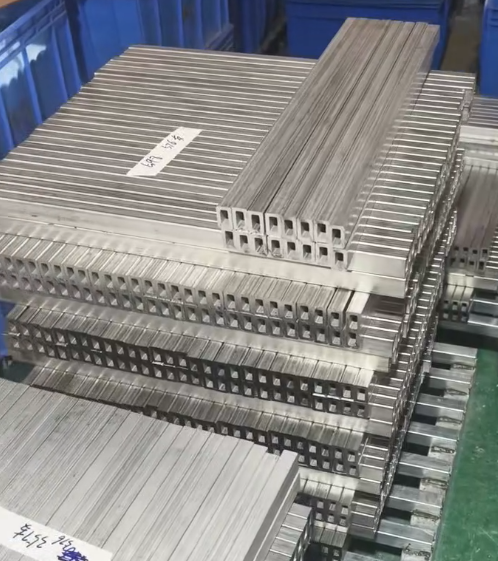
Arresting Fluid Erosion and Cavitation: High-velocity cooling fluids trigger severe localized fluid shear stresses and microscopic cavitation effects at elbows, tees, and manifolds. Copper and polymer lines readily undergo wall thinning and localized pitting under continuous erosion. Stainless steel tubes possess high hardness and ultimate tensile strengths, easily enduring high-velocity fluid erosion ranging from 5 to 10 m/s while maintaining a flawless micro-topology.
Deflection Control Under Thermal Cycling: Data centers experience severe internal temperature fluctuations as servers cycle between peak AI training loads and low-power idle states. Stainless steel displays an exceptionally low coefficient of linear thermal expansion (approximately 16–18 × 10⁻⁶/°C). Under cyclic thermal loading, the pipeline assembly maintains its rigid, straight geometry without sagging or deflection. This drastically minimizes the shear fatigue exerted on quick-disconnect (QD) couplings, preventing sealing ring distortion and eliminating leak paths at joint interfaces.
Perfect Alignment with Automated Orbital TIG Welding: High-purity stainless steel liquid cooling tubes—specifically those with sulfur content tightly governed within the 0.005% to 0.017% golden window—are optimized for computerized automated orbital TIG welding.
Achieving a Homogenous, Step-Free Infrastructure: Through automated orbital welding, tubes, headers, and manifolds are fused via full-penetration welds that render the weld bead reinforcement profile flat against the parent metal matrix. This seamless metallic integration completely eliminates the chemical aging risks associated with mechanical threads, rubber gaskets, or structural adhesives, delivering over 30 years of maintenance-free leak redundancy.
-
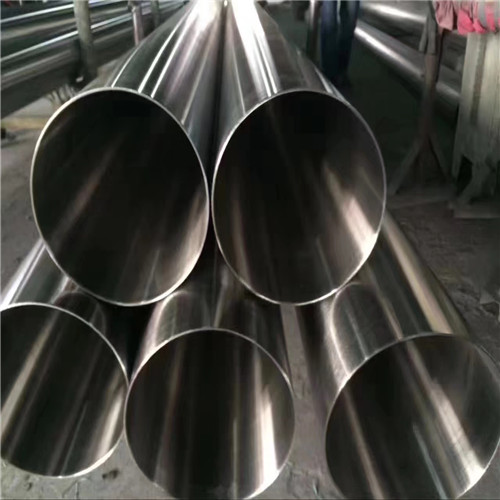
[Company news] High quality supply of stainless steel pipe for ho......
2022-04-10
After years of development and innovation, the stainless steel pipe for household decoration has evolved from a single "slot body" to a "system" produ......
-

[Company news] Warmly celebrate the official launch of the fsunsc......
2005-07-19
Foshan Sunsco Technology Co.Ltd is located in Foshan City of China, focusing on stainless steel area for more than 12 years. With the support of the m......
-
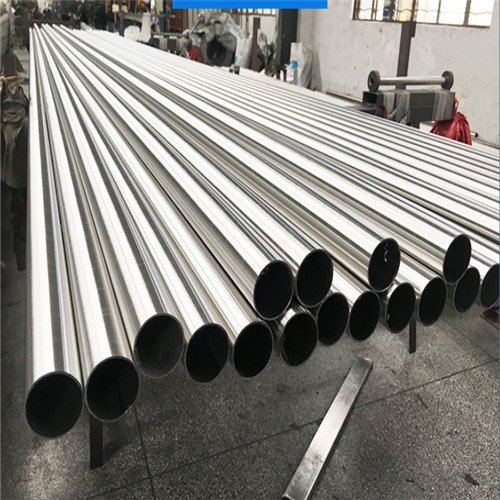
[Industry dynamics] 304 stainless steel pipe market improves
2021-12-20
FSUNSCO Company operates a series of 304 stainless steel tubes all the year round. Stainless steel pipe, 304 stainless steel plate, 304 stainless stee......
-
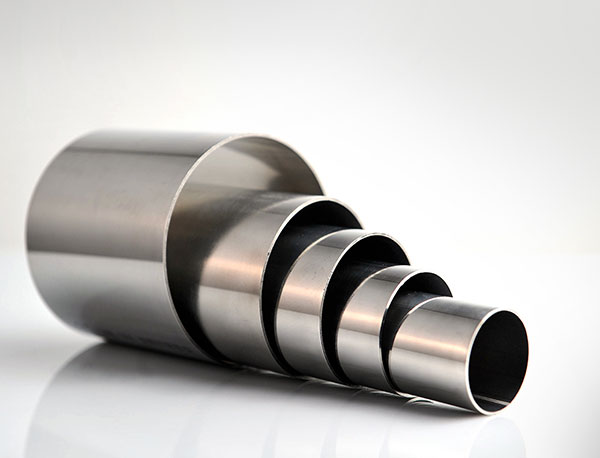
[Industry dynamics] What can help us to quickly distinguish between 30......
2020-06-20
Many friends will worry when choosing stainless steel, this is because he can not distinguish between 304 and 201 stainless steel, how to quickly dist......